
The Strategic Power of Naming: Why the Iran War Was Inevitable
Mar 09, 2026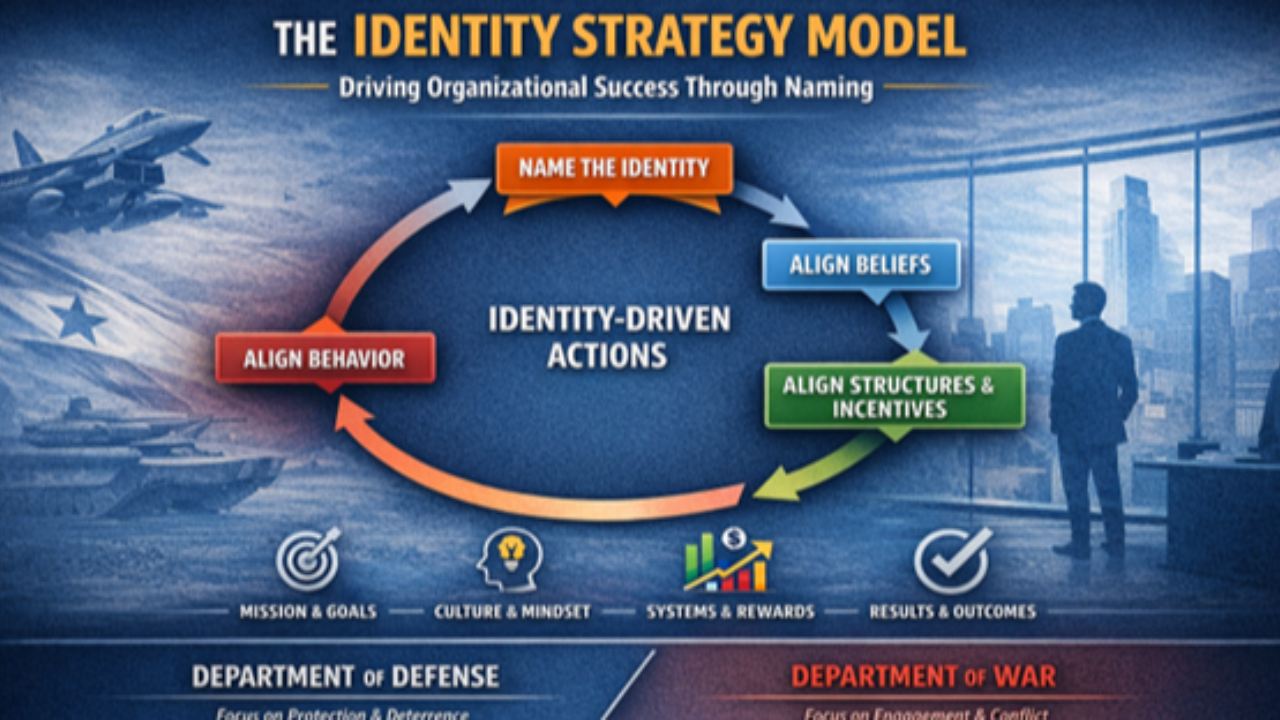
In strategy, language is not merely descriptive, it is directional. Names define roles, roles shape beliefs, and beliefs guide action. Over time, organizations, institutions, and even nations begin behaving in ways that fulfill the identity implied by the names they adopt.
This principle, what strategists often describe as identity-driven behavior, helps explain why certain geopolitical conflicts appear inevitable in hindsight.
The current war involving Iran, the United States, and Israel provides a powerful illustration of that principle.
The conflict began on February 28, 2026, when coordinated U.S.– Israeli strikes targeted Iranian military and leadership infrastructure, triggering missile and drone retaliation across the Middle East. In the weeks since, Iranian attacks have struck regional targets, U.S. service members have been killed, and the war has expanded across multiple theaters.
But the road to this war did not begin in February. It began the day the Department of Defense was renamed the Department of War.
Strategically speaking, the trajectory toward conflict was visible months earlier, in an unexpected place: Venezuela.
Venezuela: The Prelude to War
On January 3, 2026, the United States launched a military operation inside Venezuela targeting the government of Venezuelan president Nicolás Maduro. The operation involved U.S. airstrikes and special operations forces that ultimately captured Maduro and transported him to the United States to face criminal charges.
Strategically, this operation signaled something significant.
For the first time in decades, the United States conducted a direct regime-removal military operation in the Western Hemisphere.
This action demonstrated both capability and willingness. It reset the strategic precedent that the United States was prepared to use direct military force to remove hostile governments when diplomacy failed.
Once that precedent was established, the barrier to similar action elsewhere was lowered.
The next theater was Iran.
From Venezuela to Tehran
Following the Venezuela operation, tensions with Iran escalated rapidly.
Diplomatic negotiations over Iran’s nuclear program stalled, and intelligence assessments suggested that Tehran was approaching nuclear breakout capability. At the same time, U.S. military assets were repositioned across the Middle East while Israeli leaders intensified calls for decisive action.
Within weeks, the coordinated assault on Iran began.
What appeared to the public as a sudden escalation was, in reality, a strategic progression:
- The actions in Venezuela demonstrated operational capability and political willingness for regime intervention.
- Iran represented the most strategically consequential adversary in U.S. doctrine.
- Military planning already existed for such a conflict.
- Once the precedent was set, execution followed.
The Venezuela operation functioned as a strategic prelude.
The Department of Defense vs. the Department of War
To understand why these events unfolded the way they did, consider a deeper principle; the principle of identity-driven behavior.
For a moment, acting as if it hasn’t already happened, imagine if the United States Department of Defense were renamed the Department of War.
At first glance, this might appear cosmetic. Strategically, it would represent a profound shift; a shift from defense to offense.
The word defense implies:
- protection
- deterrence
- stability
The word war implies:
- engagement
- offensive capability
- victory over adversaries
Names create expectations. Expectations create behavior.
If the mission of a military institution is defined around war, the system inevitably organizes itself around:
- preparing for war
- identifying adversaries
- developing offensive capabilities
- planning decisive conflicts
Over time, the institution begins to look for conflict that validates its purpose.
War becomes the fulfillment of institutional identity. The bigger question: was the name change inadvertent or strategic socialization; preparing the country for what was to come.
The Strategic Mechanism: Name → Identity → Action
This pattern appears repeatedly across history and across sectors.
The mechanism is simple but powerful:
Name → Identity → Strategy → Behavior → Outcome
Once an institution adopts an identity, it begins aligning its beliefs, resources, and actions to fulfill that role.
In the case of the Iran war:
- Iran was consistently framed as a primary adversary.
- Military doctrine increasingly focused on defeating Iranian capabilities.
- Operational capacity was developed for such a conflict.
- When geopolitical pressure peaked, the system executed the strategy it had prepared for.
War became the natural extension of institutional identity.
The Business Lesson: Naming Shapes Corporate Strategy
While the Iran war demonstrates this dynamic at the geopolitical level, the same principle operates inside organizations and companies.
Leaders often underestimate the strategic power of naming. But naming determines how organizations think, behave, and allocate resources.
Corporate Rebranding
When Facebook rebranded as Meta, the company effectively declared its future.
After the name change:
- billions were invested in virtual reality
- new divisions were created
- hiring shifted toward immersive technology
The name created the strategy.
Organizational Identity
Consider the difference between a Sales Department and a Customer Success Department.
Sales organizations focus on closing deals.
Customer success organizations focus on retention and lifetime value.
The name shapes the priorities and behavior.
Customer Identity
Companies that refer to their users as customers behave differently from companies that call them members.
Organizations like Costco build loyalty through membership identity.
Members belong.
Customers transact.
The name shapes the relationship.
Implementing Identity-Driven Strategy in Organizations
Leaders can intentionally apply this concept through what can be called The Identity Strategy Model.
Rather than starting with tactics or operations, leaders begin by defining the identity of the organization they want to create.
The Identity Strategy Model
- Name the Identity
The first step is defining the identity of the organization or initiative.
Examples:
- “Innovation Lab” vs. “Research Department”
- “Client Success Team” vs. “Account Management”
- “Community Impact Division” vs. “Outreach Department”
Each name communicates a different mission and expectation.
The goal is to choose a name that reflects the future behavior you want to see.
- Align Beliefs
Once the identity is defined, leadership must shape internal beliefs around that identity.
This includes:
- storytelling
- leadership messaging
- internal communications
- training and onboarding
People must begin to see themselves as part of the identity the organization has declared.
- Align Structures and Incentives
Identity becomes real when it is reinforced by structure.
Leaders should align:
- performance metrics
- budgets
- hiring profiles
- incentives
For example, a Customer Success organization should measure retention and customer outcomes, not just sales.
- Align Behavior
When identity, beliefs, and incentives are aligned, behavior naturally follows.
Teams begin making decisions consistent with the role they believe they occupy.
The organization starts behaving in ways that fulfill its identity.
Strategic Gravity
Strategists often describe this phenomenon as strategic gravity.
Once an identity is defined, it begins pulling the system toward outcomes consistent with that identity.
In geopolitics, this gravitational pull contributed to the conflict now unfolding between Iran and the United States.
In business, the same force shapes innovation, culture, and growth.
The Leadership Question
The strategic power of naming is one of the most underestimated forces in leadership.
Whether in government, nonprofits, or corporations, leaders must recognize that names are not cosmetic.
They are strategic architecture.
When you name a department, initiative, or mission, you are not simply describing a function, you are defining the future behavior of the system.
Over time, people align their beliefs, intentions, and actions to fulfill that identity.
Which leads to the most important leadership question:
What future are you naming into existence?